
Key Takeaways
- Kratom and concentrated 7-OH products sold across Oklahoma City act on mu-opioid receptors, so stopping can trigger opioid-like withdrawal including sweats, body aches, restlessness, and irritability.2,4
- Leaf kratom and concentrated 7-OH tablets or shots are pharmacologically different, and knowing which one you used shapes the OKC intake conversation and detox plan.13
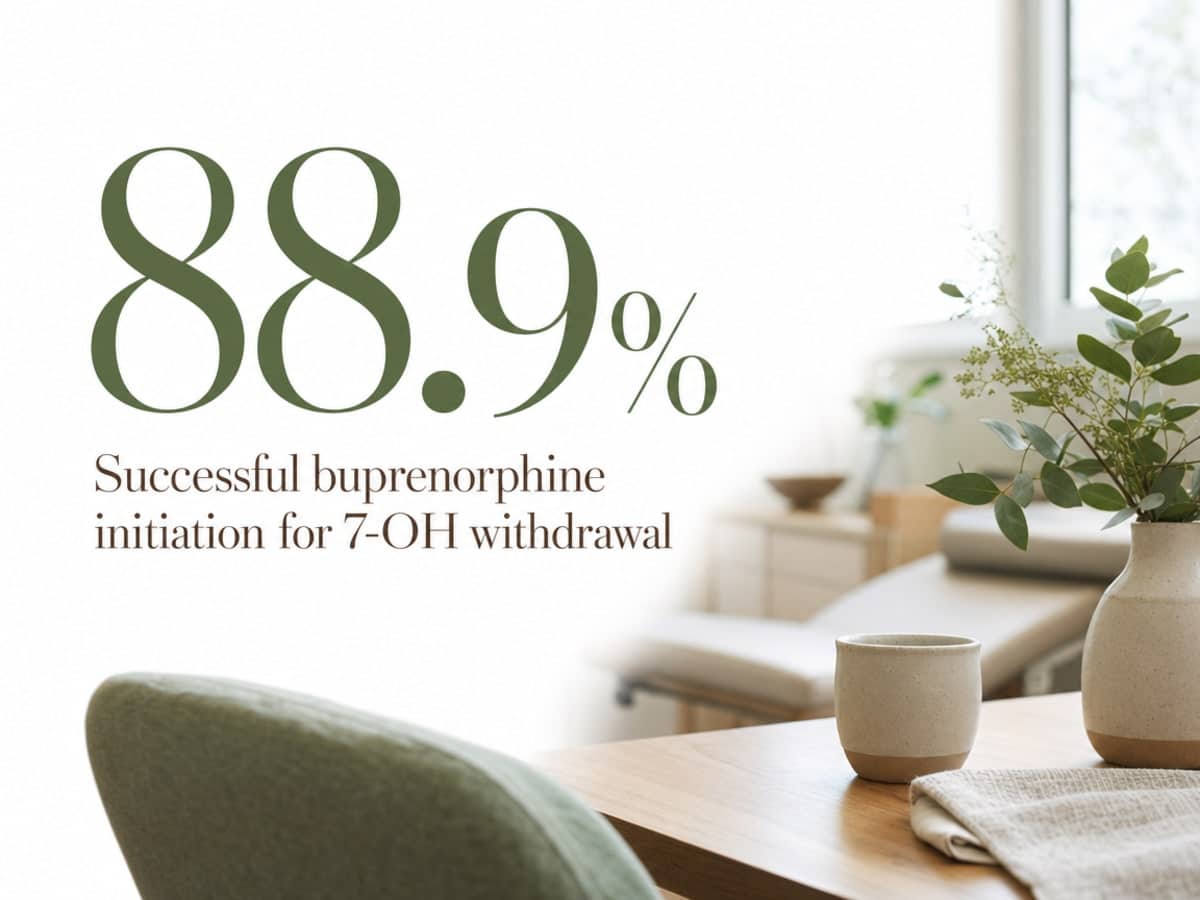
- Supervised detox in OKC typically pairs buprenorphine/naloxone with clonidine, ondansetron, and loperamide, with one 7-OH case series reporting stabilization in 88.9% of patients.9,10
- Before calling, compare coverage under SoonerCare or commercial insurance, admission timing, prior authorization steps, and whether the program admits specifically for kratom and 7-OH withdrawal.16
You Tried to Stop and It Hit Harder Than You Expected
You put the bag down. Maybe you flushed the tablets, or told yourself the shot in the fridge was the last one. By hour twelve, your legs would not stop moving. By day two, you were sweating through the sheets, snapping at people you love, and staring at the ceiling at 3 a.m. wondering how a product sold at the counter of a smoke shop off I-240 could make you feel like this. Kratom withdrawal treatment OKC can provide support during this process.
That reaction is not in your head. Kratom, and the concentrated 7-hydroxymitragynine (7-OH) tablets and shots showing up across Oklahoma City, act on the same brain receptors as opioids. The FDA has flagged 7-OH products as novel potent opioid products and lists withdrawal symptoms that match what you are feeling: restlessness, body aches, fatigue, irritability, cold sweats. NIDA notes that people who stop regular kratom use can experience withdrawal, and that many started using it to manage cravings or symptoms in the first place.1,2,4
So here is the honest version. You are not weak. You are not being dramatic. Your body adjusted to a substance that behaves like an opioid, and now it is asking for it back. That is pharmacology, not character.
The rest of this page walks you through what withdrawal actually looks like, what supervised detox in OKC involves, and how to take one next step without pretending you can white-knuckle your way through alone.
Leaf Kratom vs. Concentrated 7-OH: Why the Difference Matters in Oklahoma City
If you have been buying green powder in a pouch, brewing it into tea, or scooping it into capsules, you have been using leaf kratom. If you have been swallowing a small tablet or knocking back a shot the size of a 5-hour Energy bottle, you have probably been using a concentrated 7-hydroxymitragynine (7-OH) product. Same corner shop, sometimes the same shelf, very different drug.
Here is what actually matters for your body. Leaf kratom contains mitragynine as its main alkaloid, with 7-OH present only in trace amounts. Both mitragynine and 7-OH act as partial mu-opioid agonists, which is the same receptor family morphine and fentanyl hit. But the products marketed as “7-OH” — the tablets, shots, and dissolvable strips that started appearing behind OKC counters over the last couple of years — are enhanced or spiked so that 7-OH becomes the primary active ingredient at concentrations that do not occur in the plant. The FDA has been blunt about this distinction, calling these concentrated 7-OH products “novel potent opioid products” that are increasingly sold online, in smoke shops, and at gas stations.2,4,13
Why does that matter when you are trying to stop? A few reasons that are worth sitting with:12,13
- Pharmacology. Concentrated 7-OH is a stronger mu-opioid agonist than mitragynine, so the physical dependence it builds tends to look more like classic opioid dependence than like a caffeine or supplement habit.
- Use pattern. Leaf kratom users often dose several times a day with powder or capsules. 7-OH tablet and shot users tend to redose faster because the products are engineered for a quicker, sharper effect — which is exactly the pattern that builds tolerance and withdrawal.
- Withdrawal profile. Recent reviews describe kratom and 7-OH as producing opioid-like withdrawal, with no standardized treatment protocol yet in place.
- Legal status. Neither leaf kratom nor 7-OH is a federally scheduled controlled substance right now, and there are no FDA-approved drugs containing kratom or kratom-derived compounds. That legal-gray-area feeling at checkout is not a sign the product is safe. It is a sign regulation has not caught up.
If you are in Oklahoma City and you are not sure which one you have been using, you are not alone. The labels are inconsistent, marketing is aggressive, and “kratom” gets used as a catch-all word on both packaging and in doctor’s offices. When you call for help, bring the bottle or the box if you can. It changes the plan.

What Withdrawal Actually Feels Like, Hour by Hour
Knowing the shape of what you are going through helps. Not because it makes it easier — it does not — but because it stops the middle-of-the-night questions that go, is this normal, is this dangerous, is this ever going to end. Here is what the clinical literature and the FDA say you can typically expect. Your timeline may run a little faster or slower depending on how much you were using, how concentrated the product was, and whether you were mixing it with anything else.
The first 24 hours: the switch flips.
Somewhere between six and sixteen hours after your last dose, you start to feel it. Restlessness first — the kind where you cannot get comfortable in your own skin. Your legs want to move. You yawn constantly. Cold sweats show up, then irritability that surprises you with how sharp it feels. The FDA lists exactly these symptoms in its consumer update on 7-OH products: restlessness, body aches, fatigue, irritability, and cold sweats. If you have been using concentrated 7-OH tablets or shots, this phase can arrive faster and hit harder than it does for people coming off leaf powder.2
Days two through four: the peak.
This is the stretch people describe as “the flu, but meaner.” Body aches settle into your back, hips, and legs. Your stomach turns on you — nausea, cramping, diarrhea. Sleep breaks apart. You might get an hour, then stare at the ceiling for three. Anxiety spikes. The systematic review of kratom withdrawal describes this as a syndrome clinicians should approach the same way they approach opioid withdrawal, with attention to both the acute symptoms and the risk of relapse once the worst passes. This is also the window where most people who try to quit alone go back to using — not because they lack willpower, but because the body is screaming for relief and the relief is a five-minute drive away.3
Days five through ten: the long tail.
The sharp physical symptoms start to fade. What replaces them is quieter and, in some ways, harder to name. Fatigue that does not lift with sleep. Low mood. A flat, gray feeling where motivation used to be. Cravings that come in waves, especially around the times of day you used to dose. NIDA notes that people who stop regular kratom use can experience this kind of protracted discomfort, which is part of why so many people started using kratom to self-manage cravings in the first place.1
The Mixed Evidence, Told Honestly
You deserve the truth about what researchers actually know, not a polished version designed to scare you into a phone call. Here it is.
Some clinical studies of kratom users did not detect withdrawal on standardized scales at all. A scientific workshop reviewing the field noted exactly that — that certain human studies failed to observe the syndrome using the same measurement tools clinicians use for opioids, and that kratom is not FDA-approved for any medical use. That is a real finding, and it matters. It means kratom withdrawal is not a guaranteed outcome for every person who stops using every product.11
And. Other clinical work paints a different picture. The systematic review that most detox physicians reference concluded that clinicians should recognize kratom withdrawal symptomatology and treat it with the same framework used for opioid withdrawal. Case series describe people needing buprenorphine/naloxone doses up to 24 mg per day to manage prolonged symptoms. The FDA has logged withdrawal reports specifically tied to concentrated 7-OH products — restlessness, body aches, fatigue, irritability, cold sweats — severe enough to warrant a public consumer update.2,3,6
Both things are true at once. For some people, especially those using leaf kratom at modest doses, stopping is uncomfortable but manageable at home. For others, especially those using concentrated 7-OH tablets or shots multiple times a day, it looks and feels like coming off a short-acting opioid. What you are experiencing right now is more reliable evidence for your own body than any study average. If it is bad enough that you searched for this page, that counts.
What Supervised Detox in OKC Actually Looks Like
Here is what people picture when they hear “medical detox”: a hospital gown, a locked door, a stranger with a clipboard asking why you can’t just quit. That is not what this is.
A supervised detox for kratom or 7-OH looks a lot more like a small residential setting with nurses on-site around the clock, a physician who has actually treated this before, and a private room where you can sweat, sleep, and cry without having to explain yourself. The medical work happens quietly in the background. The point is to make the worst 72 to 120 hours survivable and to set you up for whatever comes next.
The medication piece is the part most people have questions about. Because mitragynine and 7-OH act as partial mu-opioid agonists, detox programs use the same medications that work for short-acting opioid withdrawal. Buprenorphine/naloxone (often called Suboxone) is the workhorse. In a recent clinical series focused specifically on people withdrawing from concentrated 7-OH products, 88.9% of cases were successfully initiated and stabilized on buprenorphine, with symptom improvement at follow-up. That number is worth pausing on. It comes from a case series — a group of real patients, tracked and reported by their clinicians — not a randomized trial with a control arm. Guidance is still being written. But it is the strongest signal available right now that a medication used every day in OKC opioid detox programs also works for the 7-OH withdrawal that started showing up in clinics over the last two years.4,9
Buprenorphine is not the whole picture. Emergency-department protocols for acute 7-OH withdrawal pair it with adjunct medications that target the specific symptoms you are actually feeling: clonidine to calm the autonomic storm — the sweating, the racing heart, the restlessness; ondansetron for nausea so you can keep water down; loperamide for the GI symptoms that make the second and third day so miserable. In a supervised setting, a nurse can give you the next one before you have to ask, and a physician can adjust doses when something is not working. Case reports also show that prolonged withdrawal — the kind that lingers past the usual timeline, often with heavier or polysubstance use — sometimes needs buprenorphine doses up to 24 mg per day for longer than a standard opioid taper. That is exactly the kind of adjustment that is hard to make on a kitchen counter and straightforward to make in a program.6,10
Around the medication, the rest of what you get is quieter but matters. Vitals checked overnight so a fast heart rate or a spike in blood pressure gets caught early. A careful review of everything else you take — because kratom can interact with common prescriptions, and picking that apart at admission avoids problems later. Meals when you can eat. Hydration when you can’t. A conversation, when you are ready, about what happens after the acute withdrawal fades, because the systematic review is clear that long-term follow-up is what prevents the return to use.3,14
Renewal Springs Detox is one of the local facilities in Oklahoma City equipped to run this protocol for kratom and 7-OH specifically, not as an afterthought to opioid detox but as its own admission pathway. That matters when you call, because you should not have to translate what you have been using into something a nurse is more familiar with.
When Cold-Turkey at Home Becomes a Medical Problem
Plenty of people do stop kratom at home. If you were using a modest amount of leaf powder for a few months, you might ride out three or four rough days on the couch with Gatorade and a heating pad and come out the other side. That is a real path, and it is not the one this section is about.
This section is about the moment when the plan you had — sweat it out, drink water, tough it up — stops matching what your body is doing. A few specific signals mean it is time to stop trying alone and pick up the phone:6,10,14
- You cannot keep water down for more than 12 hours. Persistent vomiting plus the diarrhea that comes with opioid-type withdrawal moves you toward dehydration fast, and dehydration is what turns an uncomfortable detox into an ER visit.
- Your heart is racing or your blood pressure feels off. The autonomic symptoms of 7-OH withdrawal — pounding heart, sweats, tremor — are exactly what clonidine and other adjunct medications are meant to calm in a supervised setting.
- You have already relapsed once or twice this week. That is not a character flaw. Case reports describe people needing prolonged, higher-dose buprenorphine support because the symptoms simply outlast a home attempt. Going back to the product does not mean detox is impossible. It means the tools you have are not enough.
- You are mixing. If kratom or 7-OH is sitting on top of alcohol, benzodiazepines, or prescription opioids, cold-turkey at home is not a plan — it is a gamble on which withdrawal syndrome hits first. Kratom can also interact with common prescriptions in ways that complicate self-managed tapers.
- Thoughts of self-harm are showing up. The low mood and anxiety of the second week are real, and they deserve a clinician, not a group chat.
If you are reading this list and nodding at more than one line, that is your answer. Calling a detox program is not giving up on yourself. It is choosing a shorter, safer version of the same fight.
Paying for Detox in Oklahoma: Insurance, Medicaid, and Prior Authorization
The cost question is usually the one that keeps people on the couch for another week. It should not. Detox in Oklahoma is treated as a covered medical service by most commercial plans and by SoonerCare, the state’s Medicaid program. The Oklahoma Health Care Authority lists detox and residential substance use disorder services as covered benefits, with the caveat that prior authorization is required for several eligibility groups. That last part is why people sometimes hear “we’re waiting on approval” — it is not a stall tactic, it is how the coverage works.16
A few practical things worth knowing before you call:
- Bring your insurance card and a list of medications. A benefits verification call takes a few minutes and tells you what your plan actually covers, what your out-of-pocket looks like, and whether prior authorization is needed for admission.
- SoonerCare covers detox. If you are on Medicaid, you are not shut out of medically supervised care. The prior authorization step is handled by the facility, not by you, but the clock starts when you call.
- Commercial plans usually cover medical detox as a medical necessity. Kratom and 7-OH dependence fits under substance use disorder benefits, even though the products themselves are sold over the counter.
- Ask about admission timing. A good program can often admit the same day or the next morning once benefits clear.
Cost should not be the reason day three looks like day one. Ask the question out loud when you call — it is a normal one, and the answer is usually better than you fear.
Local Referral Lines and What to Say When You Call
You do not need a script, but a few sentences ready to go will save you from freezing up when someone answers. Here are the numbers that actually work in Oklahoma City, and what they are for.15,17
- 988 — call or text for immediate mental health and crisis support, including substance-related crises. The City of Oklahoma City routes residents to 988 as the primary connection point.15
- HeartLine 211 — dial 2-1-1, or text your ZIP code to 898-211, to be connected with local substance use and social services. The Oklahoma State Department of Health lists 211 and the text option as the standard statewide referral path.
- Text HELP to (877) 836-2111 — a state-run text line for people who cannot or do not want to talk on the phone.
- A local medical detox program — for direct admission questions, benefits verification, and same-day or next-morning intake. Renewal Springs Detox in OKC takes these calls around the clock and admits specifically for kratom and 7-OH withdrawal.
When you dial, try something like this: “I’ve been using kratom” — or “7-OH tablets,” “shots,” whatever the label says — “and when I try to stop I get sick. I need help figuring out what to do next.” That is enough. They will take it from there.
If You’re the Spouse, Parent, or Adult Child Reading This
You have watched someone you love get quieter, then sicker, then defensive when you ask about the pouch or the little bottle on the counter. You are not overreacting by taking this seriously. Kratom and 7-OH dependence are recognized clinical problems, and the withdrawal your person is describing — the sweats, the leg cramps, the 3 a.m. irritability — lines up with what the FDA has documented for these products.2
A few things that help. Do not frame the conversation as an ultimatum about willpower. This is a substance that acts on opioid receptors, and stopping without support is genuinely hard. Ask what they are using, and if you can, look at the label together — leaf kratom and concentrated 7-OH tablets or shots need different intake conversations. Offer to make the call with them, or to sit in the room while they make it. Handing someone a phone number rarely works. Sitting on the couch while they dial usually does.4
If they are not ready today, keep the door open without keeping the product in the house. Renewal Springs Detox admits for kratom and 7-OH specifically and will talk through benefits and next steps with family members too. You do not have to have the perfect words. You just have to be the one who did not look away.
Talk to Someone Who Gets Kratom Withdrawal
Get real answers and immediate support for safe kratom detox, right when you need it most.
Frequently Asked Questions
Is kratom withdrawal really as bad as opioid withdrawal?
For some people, yes. Mitragynine and 7-OH act on the same mu-opioid receptors as prescription opioids, and clinicians are advised to approach kratom withdrawal the same way they approach opioid withdrawal. For others, especially at lower leaf-kratom doses, symptoms stay mild. What you are actually feeling matters more than the average — if it is hard enough that you searched for help, that counts.3,4
How long does kratom or 7-OH withdrawal last?
Acute symptoms usually start within 6 to 16 hours after your last dose, peak between days two and four, and start easing by days five to ten. A quieter tail of fatigue, low mood, and cravings can linger for weeks. Concentrated 7-OH tablets and shots tend to produce a faster, sharper onset than leaf powder because the products are engineered for stronger, quicker mu-opioid receptor effects.2,13
Can I detox from kratom at home, or do I need medical supervision?
Modest leaf-kratom use is sometimes ridden out at home. Call for supervision if you cannot keep water down, your heart is racing, you have already relapsed once or twice this week, you are mixing with alcohol, benzos, or opioids, or thoughts of self-harm show up. Case series describe people needing prolonged buprenorphine dosing that a kitchen taper cannot match. Kratom-drug interactions add another reason to get eyes on it.6,14
Does insurance or Oklahoma Medicaid cover kratom detox in OKC?
Usually, yes. The Oklahoma Health Care Authority lists detox and residential substance use disorder services as covered benefits under SoonerCare, with prior authorization required for several eligibility groups. Most commercial plans cover medical detox as a medical necessity for substance use disorder, and kratom or 7-OH dependence fits under that benefit even though the products are sold over the counter. Ask for a benefits verification when you call.16
What medications are used to treat kratom and 7-OH withdrawal?
Buprenorphine/naloxone is the main medication, because mitragynine and 7-OH act as partial mu-opioid agonists. A recent 7-OH-specific case series reported successful initiation and stabilization in 88.9% of patients, though guidance is still evolving and this is a case series, not a randomized trial. Emergency-department protocols add clonidine for autonomic symptoms, ondansetron for nausea, and loperamide for GI distress alongside buprenorphine.4,9,10
What should I say when I call for help in Oklahoma City?
Keep it short. Try: “I’ve been using kratom” — or “7-OH tablets” or “shots,” whatever the label says — “and when I try to stop I get sick. I need help figuring out what to do next.” That is enough. For immediate crisis support, call or text 988. For local service connection, dial 2-1-1 or text your ZIP code to 898-211. For direct detox admission, call a local medical detox program.15,17
References
- Kratom | National Institute on Drug Abuse (NIDA) – NIH. https://nida.nih.gov/research-topics/kratom
- Products Containing 7-OH Can Cause Serious Harm. https://www.fda.gov/consumers/consumer-updates/products-containing-7-oh-can-cause-serious-harm
- Kratom Withdrawal: A Systematic Review With Case Series – PubMed. https://pubmed.ncbi.nlm.nih.gov/30614408/
- Kratom Dependence and Treatment Options: A Comprehensive Review of the Literature – PubMed. https://pubmed.ncbi.nlm.nih.gov/32682371/
- Treatment of Kratom Withdrawal and Dependence With Buprenorphine and Naloxone – PubMed. https://pubmed.ncbi.nlm.nih.gov/32858563/
- Management of kratom dependence with buprenorphine/naloxone in a case series – PubMed. https://pubmed.ncbi.nlm.nih.gov/33617752/
- Buprenorphine-Naloxone in the Setting of Kratom Withdrawal and Cancer-Associated Pain – PubMed. https://pubmed.ncbi.nlm.nih.gov/36580544/
- Successful Management of Kratom Use Disorder With Buprenorphine and Naloxone. https://pmc.ncbi.nlm.nih.gov/articles/PMC10386870/
- Buprenorphine for the Management of 7-Hydroxymitragynine (7-OH) Withdrawal – PubMed. https://pubmed.ncbi.nlm.nih.gov/42225057/
- Management of acute withdrawal from 7-hydroxymitragynine products in the emergency department – PubMed. https://pubmed.ncbi.nlm.nih.gov/41690384/
- Kratom withdrawal: Discussions and conclusions of a scientific workshop – PMC. https://pmc.ncbi.nlm.nih.gov/articles/PMC10311168/
- 7-Hydroxymitragynine and Nicotine Pouch Withdrawal … – PMC. https://pmc.ncbi.nlm.nih.gov/articles/PMC12758578/
- 7-Hydroxymitragynin (7-OH). https://www.fda.gov/files/drugs/published/7-hydroxymitragynin_7-oh_an_assessment_of_the_scientific_data_and_toxicological_concerns_around_an_emerging_opioid_threat.pdf
- A Case of Potential Pharmacokinetic Kratom-drug Interactions and Challenges With a Patient’s Self-Directed Choice to Use Kratom – PubMed. https://pubmed.ncbi.nlm.nih.gov/35165231/
- Mental Health Services | City of OKC. https://www.okc.gov/Services/Public-Safety/Mental-Health-Services
- Mental Health and Substance Abuse Services – Oklahoma.gov. https://oklahoma.gov/ohca/individuals/programs/mental-health-and-substance-abuse-services.html
- How to Get Help. https://oklahoma.gov/health/health-education/injury-prevention-service/drug-overdose/how-to-get-help.html